As a control cable supplier deeply entrenched in the industry, I’ve had the privilege of witnessing firsthand how these unassuming components play a pivotal role across a vast array of sectors. In this blog, I aim to delve into the multifaceted functions of control cables, shedding light on why they are indispensable in modern technological landscapes. Control Cable
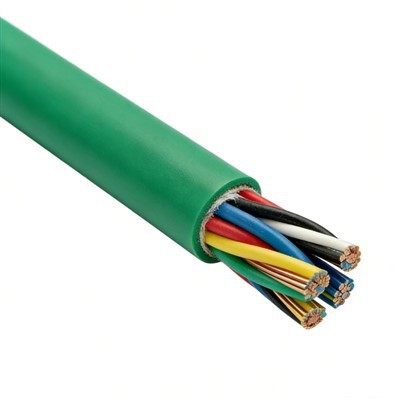
Electrical Signal Transmission
At its core, one of the primary functions of a control cable is to transmit electrical signals. These signals can carry a wide range of information, from simple on – off commands in basic machinery to complex data in advanced industrial automation systems.
In a manufacturing plant, control cables are used to connect the control panel to various devices such as motors, sensors, and actuators. When an operator sends a command from the control panel to start a motor, the electrical signal travels through the control cable. The cable is designed to ensure that the signal reaches its destination accurately and without significant interference. This is crucial because any distortion or loss of the signal can lead to malfunctions in the machinery, resulting in reduced productivity or even safety hazards.
For example, in a robotic assembly line, the control cables are responsible for transmitting precise instructions to each joint of the robot. A minor error in signal transmission could cause the robot to misplace a part, leading to production errors. High – quality control cables are engineered to minimize signal attenuation and electromagnetic interference (EMI), which can disrupt the signal. They are often shielded with materials like copper or aluminum foil to prevent external electromagnetic fields from affecting the signal inside the cable.
Control and Monitoring
Control cables are also essential for controlling and monitoring operations in various systems. In the automotive industry, control cables are used to connect the engine control unit (ECU) to different sensors and actuators in the vehicle. The ECU receives data from sensors such as the oxygen sensor, throttle position sensor, and coolant temperature sensor through control cables. Based on this information, the ECU sends control signals back to actuators like the fuel injector or the ignition coil to optimize engine performance, improve fuel efficiency, and reduce emissions.
In the power generation sector, control cables are used to monitor and control the operation of turbines, generators, and transformers. Operators can remotely monitor parameters such as voltage, current, and temperature through the signals transmitted via control cables. If a异常 condition is detected, such as an over – temperature situation in a transformer, a control signal can be sent through the cable to trigger a shutdown or other safety measures, preventing potential damage to the equipment and ensuring the safety of the power grid.
Safety and Regulation Compliance
In many industries, control cables play a vital role in ensuring safety and complying with regulations. In building automation systems, control cables are used to connect fire alarms, sprinkler systems, and emergency lighting. During a fire event, the control cables are responsible for transmitting signals from the smoke detectors to the alarm system, which can then notify the occupants of the building and trigger the sprinkler system. These cables are often required to meet strict safety standards, such as being fire – resistant and having low smoke emission characteristics, to ensure that they can continue to function properly in a fire situation.
In the aerospace industry, control cables are used in critical flight control systems. They must meet rigorous safety and reliability standards to ensure the safe operation of aircraft. These cables are designed to withstand extreme environmental conditions, including high temperatures, vibrations, and radiation. Any failure in a control cable in an aircraft could have catastrophic consequences, so quality and reliability are of utmost importance.
Flexibility and Durability
Another important function of control cables is to provide flexibility and durability. In many applications, such as in industrial robots or medical equipment, the cables need to be flexible to allow for repeated bending and movement. For example, in a robotic arm that performs repetitive tasks, the control cables need to be able to bend and twist without breaking or losing their electrical conductivity.
Durability is also crucial, especially in harsh environments. In mines or oil rigs, control cables are exposed to extreme temperatures, moisture, chemicals, and mechanical stress. High – quality control cables are designed with robust insulation and sheathing materials to protect the conductors from these harsh conditions and ensure a long service life. Specialized materials like polyurethane or polyvinyl chloride (PVC) are commonly used for the sheath, which can resist abrasion, chemical corrosion, and flame.
Compatibility and Standardization
In today’s complex technological systems, control cables need to be compatible with different devices and follow industry standards. Compatibility ensures that the cables can be easily integrated into existing systems without any compatibility issues. For example, in the field of industrial automation, control cables are designed to be compatible with different communication protocols such as Profibus, Modbus, or Ethernet/IP. This allows different devices from various manufacturers to communicate effectively with each other through the control cables.
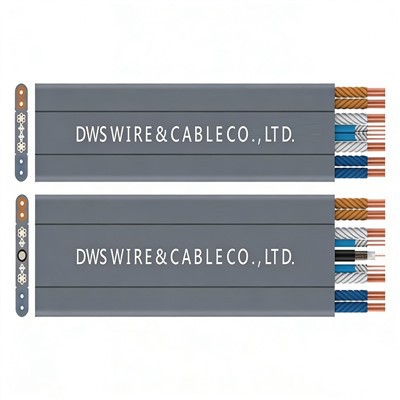
Standardization is also important for ensuring the quality and interoperability of control cables. International standards, such as those set by the International Electrotechnical Commission (IEC) or the National Electrical Manufacturers Association (NEMA), define the specifications for control cables, including their electrical properties, mechanical properties, and safety requirements. By following these standards, manufacturers can ensure that their control cables are reliable and can be used in a wide range of applications.
Control Cable As a control cable supplier, I understand the critical role that control cables play in various industries. Whether it’s transmitting electrical signals accurately, ensuring safety, or providing flexibility and durability, control cables are the unsung heroes of modern technology. If you are in the market for high – quality control cables that meet your specific requirements, I encourage you to reach out to us for a procurement discussion. We can offer you a wide range of control cables that are designed to perform in different environments and applications. We look forward to the opportunity to serve you and contribute to the success of your projects.
References
- Electrical Engineering Handbook, Edited by Richard C. Dorf
- Industrial Automation: Principles and Applications, by Thomas J. Gorman
- Aerospace Wiring Systems Handbook, by William C. Miller
Cixi Davos Wire & Cable Co., Ltd.
As one of the most professional control cable manufacturers and suppliers in China, we also support customized service. Please feel free to buy bulk high quality control cable in stock here from our factory. For price consultation, contact us.
Address: No.3, Lane 91, Ruan Ding Road, Linxi Village, Xiaolin Town, Cixi City
E-mail: roy798@163.com
WebSite: https://www.cj-supplychain.com/
