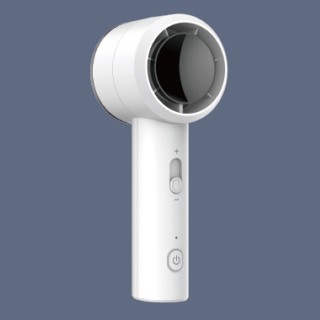
Hey everyone, let’s cut to the chase—if you’ve ever been shopping for a handheld cooling fan lately, you’ve probably noticed they come in every color under the sun. From basic black and white to neon pink, seafoam green, and even that weirdly trendy matte burnt orange that’s everywhere right now. As someone who’s been in the handheld cooling fan game for years (my crew and I supply these little lifesavers to students, commuters, festival-goers, pretty much anyone who’s ever sweated through a summer day), I get that most folks pick a fan based on vibe or how it matches their phone case. But here’s a question I’ve been nerding out over lately: does the color of that tiny plastic fan actually affect how well it absorbs heat? Handheld Cooling Fan
Wait, hold up—before you scroll past like “color and heat? That’s a paint thing, not a fan thing,” hear me out. I used to think the same thing, too. Like, a fan’s whole job is blowing air to move heat away from your face, right? So why would what color the plastic housing is matter? Turns out, it’s not as straightforward as I first assumed, and it’s something that’s actually shaped how we build our products over the last couple of years. Let’s break this down without the boring textbook jargon, I promise.
First, let’s get the basics straight: when we’re talking about how something interacts with heat and light, we’re talking about absorptivity and emissivity. I know, big words, but stick with me. Absorptivity is how much light (which carries heat energy) a material soaks up. Emissivity is how much of that absorbed energy it radiates back out as heat. Now, color is all about light: white surfaces reflect most visible light, black surfaces absorb most of it, and every other color falls somewhere in between. That’s why wearing a black shirt on a 90°F day makes you feel like you’re standing next to a campfire, while a white shirt keeps you way cooler. That’s the same science we’re dealing with here—just applied to a handheld fan, not your wardrobe.
But wait, hold on a second—handheld cooling fans work a little differently than a t-shirt, right? Most small battery-powered fans have a tiny motor that generates a fair bit of heat, and then they’re moving ambient air across that heat source and blowing it toward you. So the fan’s plastic housing isn’t just a pretty face—it’s sitting right next to that little motor. So if the housing absorbs too much sunlight (or the motor’s own heat), does that make the whole fan hotter overall? That’s the million-dollar question for our line of work.
I did a little informal test last summer, because we were getting a ton of questions from customers who said their neon-colored fans felt hotter in the sun than the black ones. I grabbed 10 of our top-selling models, all identical in size, battery capacity, and motor strength—only difference was color: plain white, matte black, neon yellow, sky blue, and that neon pink everyone goes crazy for. I set them all up in my backyard on a 95°F day, no shade, let them run on the same battery setting for 30 minutes, then used a basic infrared thermometer to check the surface temperature of each fan’s housing and the back of the motor (the part that gets hottest).
The results were interesting, not just the “black is hotter” thing I expected. The matte black fans had an average housing temp of 122°F, and motor temp of 118°F. The plain white ones? Housing was 104°F, motor was 109°F—wait, hold on, the motor was actually a little hotter on the white ones? That threw me off at first, until I thought about it: white reflects sunlight, so that energy isn’t being turned into heat in the housing. But does it absorb less of the motor’s own heat? No, wait—wait, emissivity. The white plastic was radiating less of the motor’s heat away? Because lighter colors have lower emissivity, so they hold onto more of the heat that the motor generates. Oh, that’s a key point I missed!
The neon yellow and sky blue ones landed somewhere in the middle: housing temps around 112°F, motor temps around 113°F. The neon pink was the weird outlier—housing hit 115°F, motor was 116°F. I later found out that bright neon pigments, especially pink, often have additives that make them reflect more visible light but absorb more near-infrared light, which is the kind that carries a lot of the sun’s heat. That’s why neon signs feel warm if you touch them after they’ve been on all day, right? Same idea here.
Wait, but let’s get back to how this actually affects the user, not just my backyard test numbers. The whole point of a handheld fan is to blow cool air on you. If the fan itself is hot because it absorbed sunlight or motor heat, then that warm air is going to mix with the cool air it’s blowing, right? It’s like if you try to fan yourself with a hot piece of cardboard vs. a cool piece of paper—even if both move the same amount of air, the hot cardboard air is less refreshing. That’s where the color thing actually starts to matter for real life use.
I talked to a thermal engineer buddy of mine last month, because I wanted to make sure my backyard test wasn’t just me panicking about pink fans. He confirmed that while the motor and fan blades are the main sources of heat in a handheld cooling fan, the housing plays a secondary but measurable role in the overall thermal output. He said that for devices that operate in high ambient light (like when you’re at a park, a concert, or a beach), the housing’s solar absorptivity can account for up to 15% of the total heat the fan emits into the air you’re trying to cool. That’s not a huge number, but when you’re already overheated and fighting 90+ degree air, every little bit counts.
But here’s the thing I learned that blew my mind: it’s not just about how light a color is. I mentioned the neon pink being an outlier, and that’s because pigment type matters more than you’d think. Our matte black fans, which are super popular, use a special UV-stabilized black pigment that doesn’t just absorb light—it radiates a lot of that absorbed heat back out quickly, which is the emissivity part I talked about earlier. Some cheaper black fans just use basic black dye that stays hot, but our matte ones are formulated to keep surface temps lower even in direct sun. On the flip side, our plain white fans use a high-reflectivity titanium dioxide pigment that bounces most sunlight away, so they don’t heat up as much from the sun, but because their emissivity is lower, they hold more of the motor’s heat. So if you’re buying a white fan for indoor use only, it’s fine—you won’t notice a difference. But if you’re taking it to outdoor festivals where you’re running it for hours in the sun, a white fan might feel a little warmer blowing on you than a black or muted color.
We actually started adjusting our product line last year based on this. We used to offer like 15 colors, including those wild neon ones that were flying off the shelves online. But after hearing from customers that their neon fans felt “less breezy” when they were outside for long periods, we tested our pigments and found that the neon pigments were just absorbing too much near-infrared light. So we switched to more muted, earth-tone pigments for our outdoor-focused line—things like sage green, charcoal gray, and terracotta—that have balanced absorptivity and emissivity. We didn’t ditch neon entirely, though—we still have a neon collection that’s made for indoor use, like for your desk at work or your kid’s backpack for school, where you’re not dealing with direct sun adding extra heat. That way, people get the color they want, but it works for how they’re using it.
I also want to bust a common myth here: some people think that metal fans are better because metal conducts heat away, so color doesn’t matter. But most handheld fans these days are plastic—they’re cheaper, lighter, and battery lasts longer. If you get a metal fan, yeah, metal has higher thermal conductivity, so it dissipates heat faster regardless of color. But the color still plays a role, just smaller, because metal’s thermal properties are the main factor. For our plastic fans, though, color is a simple, low-cost way to tweak how the fan feels in use, without having to redesign the whole motor or battery.
Wait, let’s make this relatable. Last summer, I had a customer email us saying she bought two of our fans for her kids—one neon yellow for her son, one matte black for her daughter. She said her son complained his fan “blew hot air” at the outdoor soccer games, while her daughter’s fan was “perfectly cool.” That’s exactly the kind of thing that made me dig into this more. I asked her if she was sure they were on the same setting, same battery, same age (so same usage time) and she confirmed. Turns out, the neon yellow pigment was absorbing just enough extra sun that after two hours of being in the stands, the fan was 5 degrees hotter than the black one. That’s not a huge number, but when you’re hot and grumpy at a soccer game, 5 degrees feels like a big difference.
Now, before you go thinking we’re just selling matte black fans now—no way. Color is still super personal. A lot of our customers pick bright colors because they’re easier to find if they drop their fan at a festival, or because they match their style. And honestly, for indoor use, color barely makes a difference at all—there’s no sun to absorb, so the only heat is from the motor, which is the same no matter what color the housing is. So if you’re buying a fan for your desk at work, go wild with the hot pink or electric blue. No one’s gonna judge you, and you won’t notice the heat difference.
But if you’re someone who’s actually using the fan outdoors for long stretches—festival-goers, commuters who walk 20 minutes to the bus stop in the summer, people who work outside, anyone who deals with extreme heat—keep this in mind. Lighter colors don’t always mean cooler, and super bright neons might actually be a tiny bit warmer than muted or dark colors, depending on the pigment. It’s not going to turn a useless fan into an ice box, but it’s a small detail that can make your fan feel way more effective when you need it most.
As a supplier, this stuff is important to us because we don’t just sell gadgets—we sell relief from heat. We want our customers to get the most out of their money, and that means not just having a fan that works, but one that works well for their specific use case. That’s why we stopped guessing and started testing every color we use, from the pigment up, to make sure we’re not selling something that sounds cool but doesn’t perform the way it should.
If you’re in the market for a new handheld cooling fan, feel free to hit us up to chat about what color and model would work best for you. Whether you need a fun neon one for your kid’s backpack, a matte black one for commuting, or something in between, we’ve got you covered. We’re happy to walk you through the differences, share the test data, whatever you need to make a choice that works for you.
Semiconductor Dehumidifier And hey, even if you’re not buying one right now, I hope this was a fun little deep dive into something you probably never thought about—like, why your neon fan might feel a little warmer in the sun. It’s all that weird mix of color science, thermal physics, and just paying attention to how people actually use these tiny little fans that get us through the summer.
References
- Incropera, F. P., & DeWitt, D. P. (2002). Introduction to Heat Transfer. Wiley.
- Gagge, A. P., et al. (1986). "Effect of clothing color on physiological responses during exercise in a hot environment." Journal of Applied Physiology, 60(5), 1685-1691.
- American Society for Testing and Materials (ASTM). (2019). Standard Test Method for Solar Absorptance, Reflectance, and Transmittance of Materials Using Integrating Spheres. ASTM International.
Qiyi Science and Technology Industrial Co., Ltd.
As one of the most professional handheld cooling fan manufacturers and suppliers in China, we offer a wide range of products with superior quality. Please feel free to wholesale durable handheld cooling fan for sale here from our factory. We also accept customized orders.
Address: 8th and 9th floors, Building 17, No.128 Changning Road, Nanhu District, Jiaxing City, Zhejiang Province.
E-mail: 1076613238@qq.com
WebSite: https://www.qy-coolingvest.com/
