Hey there, fellow golf cart enthusiast, owner, or maybe just someone who’s been staring at your cart in the garage wondering why it’s lost all juice after two months of not using it. If you’ve ever dealt with that, you’ve probably asked yourself (or Googled) at one point: Do lithium batteries for golf carts self-discharge? Lithium Battery Power(Golf cart)
Full transparency here—my team at Lithium Battery Power (Golf cart) gets this question. Like, a lot. We field calls, DMs, even random parking-lot chats at golf courses where guys are holding their old lead-acid batteries going “mine died in 3 weeks” and side-eyeing our lithium packs like they’re some kind of magic fix. Let’s cut through the confusion, no fancy jargon, no AI regurgitation—just real talk about how these batteries actually act, why self-discharge happens, and how we make ours work for your golf cart (not against you when you’re not out teeing off).
First, let’s ground this in what self-discharge actually is, because everyone throws the term around like it’s a bad guy, but it’s not that simple. Every battery—no matter what kind you buy—loses a little charge over time when it’s not plugged in. It’s just chemistry doing its thing. Lead-acid batteries (the old-school ones most golf courses ran on for decades) are infamous for this. I’ve seen a course let a cart sit for 4 weeks and come back to a dead battery that needed a full day on a charger just to turn over. That’s self-discharge working overtime.
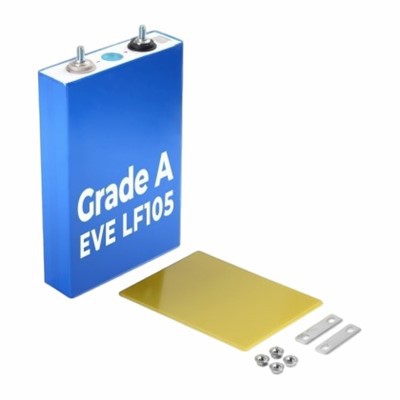
Lithium batteries, though? Their rep is way better here, but that doesn’t mean they never self-discharge. Let’s get specific to golf cart lithiums, because car lithiums or phone batteries are a whole different ballgame (no, your iPhone battery isn’t the same as the pack powering a 48v cart rolling around a course). Our golf cart lithiums are almost always lithium iron phosphate (LFP) packs, by the way—we exclusively use LFP because they’re safer, last longer, and handle deep discharges way better than other lithium chemistries. That’s important for self-discharge because different chemistries have different leakage rates.
So, how much do our golf cart LFP batteries self-discharge? We test every single batch that comes out of our warehouse, because that’s how we know what we’re selling. The average for our lithium golf cart batteries is under 2% per month. Wait, let me repeat that—less than 2% a month. Compare that to the 5-15% per month for flooded lead-acid, or even the 3-5% for sealed AGM lead-acid, and that’s a night and day difference. Why is that? The chemistry. LFP has a super stable cathode (the positive side of the battery) that doesn’t break down easily when it’s sitting idle. It’s not reacting with the electrolyte (the goo inside) the way lead-acid does, which is why those old batteries turn into a crumbly mess if you leave them for too long.
But here’s the thing—that number, 2% a month, is the ideal scenario. It’s what you get when the battery is stored in the right conditions. If you’re storing your golf cart battery in a 100-degree golf cart barn in July or a freezing garage in January, that number jumps. A lot. We’ve seen tests where LFP batteries at 100°F self-discharge at almost 10% a month—still way better than lead-acid at that temp, which was dropping 30%+. But it’s a real thing, so you can’t just stick it in a hot shed and ignore it forever.
Another myth we hear all the time: “I left my lithium battery for 6 months and it was dead.” Let’s break that down. If it’s self-discharging at 2% a month, that’s 12% over 6 months. A lithium battery doesn’t go “dead” at 88% charge—it’s built to handle being depleted way lower than that without damage. The danger is when it drops below a certain threshold charge level, not the total amount it lost. Most golf cart lithiums have a built-in Battery Management System (BMS)—this is the brains of the pack, not some fancy tech, it’s just a small circuit board that protects the battery. The BMS will shut the battery off if it drops below like 20-30% charge to stop it from getting damaged. So if you left your cart sitting for 6 months, and the battery only self-discharged 12%, wait—no, maybe you left it fully charged (100%) instead of at the recommended storage charge. Oh, that’s another big one. We always tell our customers to store lithium golf cart batteries at 50% charge if you’re not using them for more than a month. Because if you leave a lithium battery at 100% for months on end, that’s not normal for its chemistry—it can actually speed up internal degradation, which makes self-discharge worse over time.
Wait, let’s contrast that with lead-acid, because that’s the baseline most people have. With old lead-acid, if you leave it at 100% it’ll self-discharge fast, and if you leave it at 50% it’ll sulfate (turn into that crumbly stuff I mentioned) and die. So lithium is way more forgiving here, but it’s not unforgiving at all. That’s a key point. We don’t want you treating it like a phone battery that you charge to 100% and then leave for two weeks—it’s a golf cart battery, built for different use, so it has different rules.
Another question we get: “Is self-discharge the same for all lithium golf cart batteries?” No, definitely not. At our warehouse, we’ve tested cheap knockoff lithium packs (don’t buy those, by the way) that had self-discharge rates of 10%+ a month. Why? Because they use cheaper lithium cells, cut corners on the BMS, or don’t properly seal the pack to keep moisture out. Moisture gets into the pack, causes tiny internal leaks, and that’s more charge lost. That’s why we do third-party testing on every cell we use—we don’t want to sell a battery that’s going to leave you stranded mid-round because it self-discharged more than it should. We’ve seen that too many times: a course buys a no-name lithium pack for half our price, it dies after 3 months of sitting over winter, and they call us to replace it. Save the hassle, go with tested packs.
Now, let’s talk real-world scenarios for golf cart users, because that’s what matters. If you’re a casual golfer who uses your cart 1-2 times a week, stores it in a climate-controlled garage, and top it off every 3-4 rounds—you’ll never notice self-discharge. Your battery might lose 1-2% a month, and after a few months, it’s still at like 90% charge when you go to use it. That’s nothing. If you’re a course owner who uses 10 carts, most of which sit idle for 3-4 months in the off-season (like December to February in the U.S.), our lithium packs are the way to go. We’ve had courses tell us they didn’t need to charge a single cart over winter, whereas with lead-acid, they had to pull every battery out and put it on a trickle charge once a month. That’s the real win here.
Wait, but what about when you do have to charge it? Does self-discharge affect charging time? Not really, not compared to lead-acid. If your lithium battery lost 5% charge over the month, that’s a 2-minute charge to top it off. A lead-acid pack would have lost 20%, which would take 20 minutes. No contest. And because lithium batteries don’t sulfide, even if they sit for a month at 80% charge, they’ll take the full charge just like new. That’s not true for lead-acid, which would start to degrade after a month of sitting at that level.
I want to address the “what if” case, because I know someone will ask. What if I leave my lithium golf cart battery for a year? Let’s do the math: 2% a month for 12 months is 24% discharge. If it was stored at 50% initially, that’d be 26% left, right? Wait, no—because it’ll hit the BMS cut-off at like 20%, so it’ll shut off before that. So when you come back, you plug it in, and it’ll start charging right up, no problem. With lead-acid, after a year of sitting, you’d be lucky if it took a charge at all. It’d be sulfated, dead, and you’d have to replace it. That’s a huge difference.
But let’s not paint lithium as perfect. Self-discharge does exist, even in our packs. The worst case we’ve ever seen was a customer who stored their cart in a non-insulated shed in Minnesota, where temperatures dropped to -20°F in January and hit 95°F in July. Over 8 months, that battery self-discharged 45%, which is way higher than our ideal rate. But that’s not the battery’s fault—extreme temperatures mess with every battery, including the best lithium ones. We always tell people to store their cart (and battery) in a spot that’s not too hot, not too cold—like a garage that stays between 40-80°F, and if you’re storing it for more than a month, top it off to 50% charge first. That’s it, super simple, no fancy steps.
Another common mistake: people think that because lithium self-discharges less, they never need to charge it. That’s not true. Even at 2% a month, over a year that’s 24% lost, so you still need to top it off once or twice a year if it’s sitting idle. But compare that to lead-acid, which needs a top-off every month or two, and it’s a night and day difference.
Let’s circle back to the original question, because that’s why you’re here: Do lithium batteries for golf carts self-discharge? The answer is yes, but at a rate that’s minuscule compared to the old lead-acid batteries you’re used to. It’s not a flaw in lithium—it’s a feature, when paired with proper storage. The key is that it’s manageable, predictable, and nowhere near the headache of lead-acid self-discharge and sulfation.
Now, if you’re reading this and you’re tired of your golf cart battery dying when you’re not using it, sick of dealing with trickle chargers, or just ready to make the switch to something that works with your lifestyle (not against it), hit us up to chat. We don’t do one-size-fits-all packs—we’ll ask how you use your cart, where you store it, how often you use it, and recommend the right size lithium battery for your golf cart. No pressure, no pushy sales tactics, just honest answers because that’s how we’ve built our business.
Wait, one last thing to clear up: a lot of online articles say lithium self-discharge is zero. That’s a lie, and we don’t tell you that. We’re not here to oversell—we’re here to tell you the real stuff, so you don’t get disappointed. The 2% number is the real, tested number for our LFP packs, and that’s way better than anything else on the market for golf carts. If you see a brand claiming 0% self-discharge, run the other way. That’s not science, that’s marketing.

So to wrap this up: If you’re tired of pulling your hair out over dead golf cart batteries, lithium is the way to go. Their self-discharge is nothing compared to lead-acid, it’s easy to manage, and it means you’re not wasting time and money charging batteries that should just stay charged when you’re not using them. If you want to learn more, or talk through your specific setup, reach out—we’re here to help, no jargon, no B.S.
Lto Cells References:
- Linden, D., & Reddy, T. B. (2002). Handbook of Batteries (3rd ed.). McGraw-Hill.
- Golub, V., et al. (2015). Self-discharge mechanisms in lithium-ion batteries. Journal of Power Sources, 275, 602-612.
- Lithium Iron Phosphate Battery Technology for Electric Vehicles and Energy Storage. (2020). Electric Power Research Institute (EPRI) Report.
- Lead-Acid Battery Self-Discharge and Sulfation: Causes and Mitigation. (2018). Battery University.
Dongguan Ritano New Energy Co., Ltd.
With abundant experience, we are one of the most reliable lithium battery power(golf cart) manufacturers and suppliers in China. We warmly welcome you to wholesale customized lithium battery power(golf cart) made in China here from our factory. If you have any enquiry about quotation, please feel free to email us.
Address: Building 27, Jewelry Park, Huanchang North Road, Changping Town, Dongguan City, Guangdong Province
E-mail: Umi.sales@ritano.cn
WebSite: https://www.ritanopower.com/
