If you’ve ever relied on a backup power system for your home, small business, or industrial facility, you know how critical an Automatic Transfer Switch (ATS) is to keeping operations running when the grid fails. As a supplier of Automatic Transfer Switches for over 12 years, I hear the same question from customers and prospective buyers all the time: “If my ATS breaks down, can it be repaired, or do I have to replace it entirely?” The short answer is: it depends. But before you rush to write a check for a brand new unit, let’s break down what makes an ATS work, what usually goes wrong, when repair makes sense, when it doesn’t, and what to do if yours hits a snag. Automatic Transfer Switch
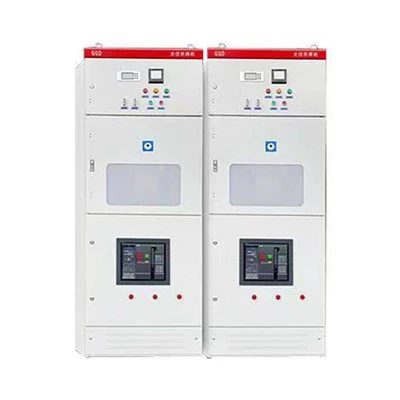
First, let’s get on the same page about what an ATS actually does, because that context matters. An ATS is the middleman between your primary power source (the utility grid) and your backup power source (a generator, solar array, or battery storage system). Its job is to sense when the grid drops, disconnect your building from the grid within seconds, and switch over to the backup power source seamlessly—no gap in power that could crash servers, spoil inventory, or disrupt medical equipment. When the grid comes back, it switches back just as smoothly. Most ATS units are either service-entrance rated (for whole-building use) or sub-panels (for specific circuits, like a server room or refrigeration unit). They have moving parts—contactors, relays, circuit breakers—and electronic components: microprocessors, sensors, and control boards. That mix of parts means some issues are fixable, and others are not.
Let’s start with the common, repairable issues. I’ll give you real examples from the 500+ ATS units I’ve serviced or helped troubleshoot over the years. The most frequent problem we see is a tripped auxiliary circuit breaker or a blown fuse. It sounds simple, but because the ATS doesn’t have a dedicated power cutoff for small components, the small fuses that power the control circuit can blow from a power surge, a bad wiring connection, or even a minor voltage spike from a storm. Most of the time, this is an easy fix: turn off the unit, replace the fuse with the exact same rating (never a higher one—that’s a fire hazard), and test it. Another common issue is a loose or corroded wiring connection. Over time, vibration from a running generator, temperature changes, or moisture in the electrical panel can cause wires to slip out of their terminals or develop a layer of corrosion that prevents current from flowing. We’ve had customers bring in ATS units that wouldn’t switch at all, and a quick check of the main line terminals revealed a wire that had worked loose from being jostled during a generator installation. That’s a free fix, no parts needed, as long as you know what you’re looking for.
Next, relay or contactor wear. The contactor is the big electrical switch that actually connects the power sources. Every time the ATS switches between grid and generator, that contactor opens and closes, and over thousands of cycles, the metal contacts can wear down, burn, or get pitted from arcing. If that’s your problem, you don’t need a whole new unit—you just need to replace the contactor. We keep spare contactors for every ATS model we sell in our warehouse, so a customer can swap it out in 15 minutes if they have basic electrical knowledge. Another repairable issue is a faulty sensor or control board. The sensor is what reads grid voltage; if it dies, the ATS can’t tell if the grid is up or down. We’ve seen sensors go bad from water damage (if a panel was left open during a rainstorm) or age, and replacing that sensor is way cheaper than a full unit. Even minor software glitches in the microprocessor are fixable—most modern ATS units have a reset function, and if that doesn’t work, we can load the latest firmware update remotely or send a replacement control board.
Now, the hard part: when repair isn’t worth it, and replacement is the better call. This is where I see customers make costly mistakes, so I always err on the side of honesty, even if that means losing a sale in the short term. The first red flag is severe internal damage from a power surge or fire. If your ATS was hit by a direct lightning strike, for example, the surge can arc through the unit’s internal wiring, melt the contactor, and fry the control board beyond recognition. Sure, you could replace each individual part, but the parts will add up to 70-80% of the cost of a new unit, and there’s no guarantee other hidden components aren’t damaged. Another case is physical damage to the unit’s housing or moving parts. If your ATS is in an outdoor enclosure, for example, and was damaged by a falling tree branch, or if the internal switching mechanism was knocked out of alignment during a construction project, the cost to repair it (or the work to get it aligned correctly) isn’t worth the hassle, especially if your power system is critical.
The biggest factor I always bring up is age and total cost of ownership. ATS units are designed to last 15 to 20 years, max. If your ATS is over 10 years old, even if you repair a small issue now, you’re likely to have another problem down the line. Parts for older models get harder to find—we have customers calling us every week asking for a replacement contactor for an ATS model we sold in 2008, and it often takes 4 to 6 weeks to source a used or refurbished part, if we can find it at all. Compare that to a new ATS, which comes with a 5-year warranty, uses the latest safety and energy efficiency standards, and has parts available for decades. For example, last year we had a customer with a 12-year-old ATS that had a bad control board. The repair would have cost $450, and the unit was on its last legs—six months later, the contactor burned out, and he ended up spending another $500 to fix that. Total repair cost: $950. A new equivalent ATS would have cost $1,100, came with a 5-year warranty, and didn’t require any ongoing repairs. In the long run, replacement was cheaper and less stressful for him.
There’s also the question of safety, which is non-negotiable in the electrical industry. Some ATS issues aren’t just inconvenient—they’re dangerous. If your ATS is arcing internally, for example, that can cause a fire in your electrical panel. If it switches at the wrong time (like when the grid is down but it thinks it’s up), that can send power back to the grid, which is a huge risk for line workers repairing lines, and a violation of electrical codes in most areas. If you’re unsure what’s wrong with your ATS, never try to troubleshoot it yourself—even something simple like replacing a fuse requires turning off the correct breakers to avoid shock, and improper repairs can void any existing warranty. That’s why as a supplier, I always tell customers to reach out to a licensed electrician or our support team before attempting any repairs.
Let me also share a recent example that drives this home. A restaurant client of ours reached out last fall saying their ATS wouldn’t switch over to the generator during a grid outage, and they had to lose power for 20 minutes, which spoiled $800 worth of food in their walk-in fridge. Their electrician checked it and said the control board was bad, and quoted them $600 to replace it. We got a closer look (they sent us photos of the unit), and noticed that the unit was 14 years old, had an exposed housing that had gotten water damage during a heavy summer storm, and the wiring terminals were corroded so badly that even replacing the control board might not fix the root issue of moisture getting inside. We told the customer that repairing the old unit would be a short-term fix at best, and recommended a new ATS that was rated for outdoor use, had a sealed housing to prevent moisture damage, and came with a 5-year warranty. They ended up purchasing it, and last month when another storm knocked out power, their ATS switched seamlessly, and they didn’t lose any food. They told us later that they saved thousands by not dealing with repeated repairs on an old unit.
Now, let’s talk about what you should do if your ATS breaks down, step by step. First, disconnect all power to the unit—turn off the main utility breaker and the generator breaker, so you don’t get shocked. If you’re comfortable checking the external components, look for tripped breakers or blown fuses, and any obvious loose or corroded wires. But even if you find a small issue, don’t run it until you get it checked. Next, reach out to your electrician, or if you bought your ATS from a supplier (hint: that’s us, but you don’t have to say that), send them the model number, photos of the unit, and a description of what’s happening (e.g., “it won’t switch over” or “it makes a loud grinding noise when it tries to switch”). A good supplier will be able to tell you right away if it’s a repairable issue, give you a quote for parts and labor, and let you know if replacement is a better option.
As someone who’s been in this business for over a decade, I’ve seen both sides: customers who saved hundreds by repairing a minor issue, and customers who wasted thousands by trying to repair an old, failing unit when replacement was the smarter choice. The key is not to wait until a disaster happens to check your ATS—do a quick test every six months: simulate a grid outage by turning off the main breaker, and make sure the ATS switches to the generator smoothly. That way, if there’s a small issue, you can fix it before it causes a bigger problem.
At the end of the day, an Automatic Transfer Switch can be repaired if the issue is minor, it’s not too old, and there’s no severe internal damage. But it’s not a one-size-fits-all answer, and cutting corners on repairs can end up costing you more in the long run, or even putting your property and safety at risk. If your ATS is acting up, don’t guess at what’s wrong—reach out to a professional who can help you make the right decision for your system.
If you’re experiencing issues with your current Automatic Transfer Switch, or you’re looking to upgrade to a reliable, long-lasting ATS for your home or business, we’re here to help. Our team can walk you through troubleshooting, repair options, or new unit pricing, so you can keep your backup power system working when you need it most.
High-Voltage Switchgear References
- National Electrical Manufacturers Association (NEMA). “Automatic Transfer Switch Standards and Application Guidelines”, 2021.
- Occupational Safety and Health Administration (OSHA). “Electrical Safety in the Workplace”, 2022.
- Underwriters Laboratories (UL). “Standard for Automatic Transfer Switches, UL 1008”, 2020.
- Electrical Construction Maintenance (EC) Magazine. “ATS Repair vs. Replacement: What to Consider”, 2023.
- International Code Council (ICC). “International Electrical Code (IEC) Article 702: Standby Systems”, 2021.
Jiangxi Yihong Electric Power Technology Co., Ltd.
Address: Chating Industrial Park, Guangxin District, Shangrao City, Jiangxi Province
E-mail: 15779933057@163.com
WebSite: https://www.yihcn.com/
