What are the security audits for Parts EDM? Let’s be real—if you’re in the Parts EDM game, this isn’t just another corporate checkbox to cross off. As someone who’s spent the last 8 years running a shop that specializes in high-precision EDM components for aerospace, medical, and automotive clients, I’ve seen what happens when security audits get overlooked. A missed audit, a skipped check, a overlooked data gap—boom, you’re staring at a $2M recall, a client ghosting you, or worse, IP getting stolen. Today, I’m breaking down exactly what Parts EDM security audits actually cover, no jargon, no fluff, just the stuff that matters when your whole business hinges on metal parts and the data that makes them. Parts EDM
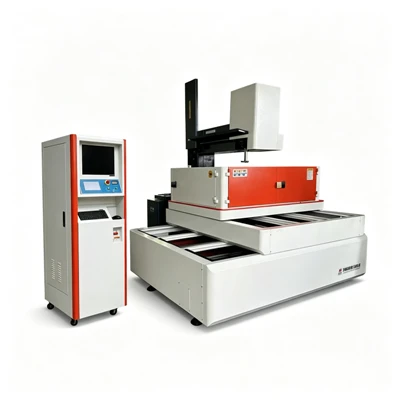
First, let’s set the scene: when a client asks for Parts EDM, they’re not just ordering a chunk of tungsten or brass. That part’s likely a critical component—think a turbine blade tip for a jet engine, a surgical implant part that goes inside someone’s body, or a sensor for an EV battery. Mess up the specs, or worse, have that design leak to a competitor, and you’re toast. So security audits for Parts EDM aren’t your generic office cybersecurity checks; they’re a mix of physical security, data security, machine security, and supply chain security, all tailored specifically to our weird, precise, high-stakes corner of manufacturing.
Let’s start with physical security, because half the time the biggest risks are right in your shop, not some cloud server. I used to laugh off this part until a former intern left the back shop door propped open for an hour after his shift. Lucky for me, the only thing that walked off was a stack of scrap copper. But I know a guy whose competitor had a key component design on a laptop sitting on an unguarded workbench—some random dude from the parking lot walked in, grabbed it, and sold it to another manufacturer. Part EDM shops have expensive machines (our sinker EDMs cost $500k+ each) and even more expensive IP. So the physical audit stuff isn’t just locking doors. It’s:
- Badge access that’s role-specific. The person running the EDM machine doesn’t need access to the design server. The quality control lead doesn’t need to be in the tool crib after hours. Auditors will go through your access logs—who swiped when, where, and if any old employee’s badge still works. Last year, we had a former temp’s badge glitch and still show active, so I fixed that immediately; auditors love catching lazy stuff like that.
- Shop floor surveillance that actually covers the right spots, not just the break room. They’ll check if cameras are pointed at the EDM cells, the design workstations, and the storage lockers for raw materials that hold high-risk alloys. And they’ll make sure footage is retained for at least 90 days—no deleting old clips after a month to save space.
- Controlled access to prototype parts. If you’re making a custom part for a new client, that prototype isn’t just left on a shelf. Auditors will ask how you track when a prototype is moved, who touches it, and how it’s disposed of when it’s no longer needed. We used to toss old prototypes in the regular trash until an auditor called us out—now we shred them, or if they’re metal, we melt them down in a secured furnace that only our lead machinist has access to.
Next up: data security, which is where most people focus, but only the tip of the iceberg for Parts EDM. Your core IP is the CAD/CAM files that tell the EDM machine where to cut, how deep to drill, what tolerance to hit (and when you’re talking medical parts, tolerances are 0.0001mm—tiny). So the data audit isn’t just “do you have a password on your computer?” It’s:
- Design file encryption. If you send files via email, are they password-protected? If you store them on your local server, are they encrypted so if someone steals a laptop, they can’t just pull up a turbine blade design? We use a cloud-based design tool with end-to-end encryption, and every file has a unique access code that only the project lead and client rep know. Auditors will test this—they’ll try to access a file with a generic password to see if it’s locked down.
- Version control and access logs for CAD/CAM. This is huge because EDM parts only work if the machine uses the exact right file. If someone accidentally uploads an old design, you’ll make 1000 wrong parts. Auditors will check your logs to see who edited a file, when, and if any unauthorized changes were made. Last quarter, our new design engineer saved a test file over a client’s production file, and the log caught it immediately—we fixed it before cutting any metal. If we hadn’t had that audit, we would’ve wasted $15k in raw material.
- Vendor and third-party access. A lot of Parts EDM shops work with tooling suppliers, material vendors, or even local machinists for overflow work. Auditors will ask what access you give these third parties. Do they have a guest login that expires after a project is done? Do they only get access to the specific files they need, not the entire server? I once had a material supplier ask for full access to our design server to “send parts faster”—I said no, and the auditor actually praised that move. Limiting third-party access is non-negotiable here.
Then there’s machine-specific security, which is the stuff that makes Parts EDM audits different from regular manufacturing or IT audits. Our EDM machines are not just generic computers—they’re precision tools that run 24/7, and if someone hacks them or messes with their settings, you get junk parts. What do auditors check here?
- Machine access controls. Can anyone just walk up to a sinker EDM and change the wire feed speed or the cut depth? No—our EDM machines have a unique PIN, and only the certified operators assigned to that machine can access its settings. Auditors will test this: they’ll ask an operator to try and change a production setting with a wrong PIN, or see if a generic worker can log in. We had a new operator forget his PIN once, and we reset it on the spot, but the audit still noted that we needed a secondary access step for new hires—fixed that in a week.
- Software updates and security patches. EDM machine software is often outdated, because a lot of operators don’t like messing with the settings that make their machine run well. But outdated software is a huge security risk. Auditors will check if your EDM machines have the latest security patches, and if you have a process to test updates before rolling them out. We used to delay patches because we feared downtime, but after a 2022 incident where a rival shop’s old EDM software got hacked, we now test patches on a spare machine first—no downtime, no risk.
- Machine connectivity. Some shops connect their EDM machines to the same network as their design server, which is a bad move. If a machine gets hacked, the hacker can get to all your design files. Auditors will check if your EDM machines are on a separate, isolated network—they can talk to the design server to get production files, but they can’t access any other parts of your system. That’s a simple fix, but so many shops skip it.
Supply chain security is the other big one that no one talks about until it’s too late. Parts EDM parts rely on specialized raw materials—titanium for aerospace, surgical-grade stainless steel, tungsten for high-heat applications. If someone swaps your raw material for a lower-grade stuff, your parts will fail, or the material itself is stolen because it has valuable metals. Auditors here check:
- Material traceability. Every ingot, every wire spool, every electrode you use has to be tracked from when it arrives at your shop to when it’s turned into a part. Auditors will check your logs to see if you have batch numbers, delivery receipts, and inspection records for every material. We used to write batch numbers on a whiteboard, but now we scan them into our inventory system—way more reliable, and auditors love that.
- Material storage security. High-value metals aren’t just sitting on a shelf where anyone can take them. Our titanium ingots are stored in a locked room with a camera, and only the material manager has the key. Auditors will check if you have a log of who takes material, when, and for what job. A few years ago, a competitor had 5 titanium ingots stolen from their shop—they couldn’t prove the metal was theirs, so they got hit with a huge insurance hike.
- Supplier vetting. Auditors will ask how you check your material suppliers. Do they have their own security protocols? Can you prove that the material you receive is actually what you paid for? We audit our top 3 material suppliers every year—we show up at their shop, check their storage, their traceability logs, so we know they’re not cutting corners.
Wait, let’s not forget about quality-related security, because in Parts EDM, security isn’t just about theft or hacks—it’s about making sure the parts you send are exactly what the client ordered. A lot of audits tie security to quality, which makes sense. For example:
- Part identification. Every finished part has a unique serial number that links back to the original design, the machine that cut it, the operator who ran it, and the raw material batch. If a client has a part failure, you can trace it back immediately. Auditors will check if this number is stamped on the part (or etched, for tiny medical parts) and logged in your system.
- Non-disclosure agreements (NDAs). Most Parts EDM clients work with multiple vendors, so they need to know your team won’t leak their designs. Auditors will check if all your employees—from the design team to the shop floor operators—have signed NDAs, and if you have training that reminds them not to talk about client projects. We do quarterly NDA refreshers, and we even have a sign for the break room that says “No client project talk here—client confidentiality first.” It’s simple, but it works.
Now, let’s be real—audits aren’t just about passing a checklist. As a Parts EDM supplier, they’re how you keep clients. I’ve had big aerospace clients say they won’t work with a shop that hasn’t passed a third-party security audit in the last 12 months. One time, a potential new medical client came to us, and they required a full security audit before they even sent us the CAD file. We did our internal audit, fixed a few small gaps (like that old temp’s badge we forgot to deactivate), passed their audit, and now we’re their go-to Parts EDM shop for implant parts. That’s the thing: security audits aren’t a cost—they’re an investment in keeping your business and your clients happy.
I’ve seen too many small Parts EDM shops ignore audits, saying “we’re too busy making parts to deal with paperwork.” Then a client pulls out, or a hack happens, and they’re gone. It doesn’t have to be that way. The key is to not see audits as a one-time chore. We do monthly internal security checks—no auditors, just our team going through access logs, checking camera feeds, testing EDM machine PINs. That way, when the big third-party audit rolls around, we’re not scrambling to fix a bunch of last-minute issues.
If you’re a parts buyer looking for a reliable Parts EDM supplier, security audits should be at the top of your checklist. And if you’re a shop owner looking to nail your next audit, start small: get rid of old access badges, isolate your EDM machines on a separate network, encrypt your CAD files, and do monthly internal checks. It’s not as hard as it sounds, and it will save you so much stress down the line.
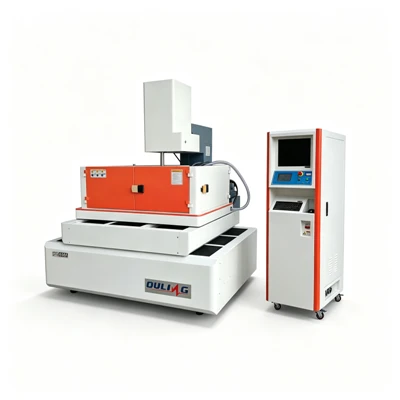
If you’re in the market for a Parts EDM partner that takes security seriously, hit us up to chat through your project needs. We’ve got the audits, the track record, and the precision to get your parts right, on time, and secure from design to delivery.
Mirror Finish Die Sinker EDM References
- National Institute of Standards and Technology (NIST) Special Publication 800-161, Supply Chain Risk Management for Federal Information Systems and Organizations.
- Aerospace Industries Association (AIA) Cybersecurity Guidelines for Manufacturing Suppliers, 2023.
- International Organization for Standardization (ISO) 27001:2022, Information Security Management Systems Requirements.
- Precision Machined Products Association (PMPA) Security Best Practices for High-Precision Manufacturing, 2024.
Taizhou Ouling CNC Equipment Co., Ltd.
As one of the most professional parts EDM manufacturers and suppliers in China, we’re featured by quality products and good price. Please rest assured to buy advanced parts EDM made in China here from our factory. Welcome to contact us for quotation.
Address: No. 9 jingang Road, Yangzhou City Jiangsu Province, China
E-mail: 574751243@qq.com
WebSite: https://www.oulingedm.com/
