If you’ve ever stood in a sand casting foundry during a summer afternoon, you know how relentless the energy demand feels—furnaces roaring around the clock, compressors hissing, cooling systems running nonstop to keep metal and mold aligned, not to mention the electricity feeding every grinder, sander, and heat treat oven. As an iron sand castings supplier, I’ve spent more years than I care to admit hovering between those furnaces and the back office, trying to balance our need to deliver high-quality parts on time with the reality that energy costs eat up a huge chunk of our operating budget. Worse, wasteful energy use isn’t just bad for our bottom line—it’s hard on the environment, and lately, our clients have started asking for greener production numbers before they sign a contract. The good news? I’ve tested enough small, iterative changes (and a few big ones that didn’t pan out) to put together a playbook for cutting energy use without sacrificing the strength or precision our iron sand castings are known for. Iron Sand Castings

Let’s start at the biggest energy drain in any foundry: the melting furnace. For most iron sand casting operations, that’s a cupola or an induction furnace—and I’ve worked with both, so I know how easy it is to take their energy efficiency for granted. A few years back, we were running our cupola 12 hours a day, every day, with a steady stream of cold iron ore and coke, and we were losing an estimated 15% of the heat we generated straight up the stack. That’s when we switched to preheating the combustion air going into the cupola, using the exhaust gases from the top of the furnace. It sounds simple, but we had to add a heat exchanger that captured the waste heat and transferred it to incoming air before it hit the coke bed. The first month, we saw a 9% drop in energy use for melting—no extra costs for raw materials, no change in the quality of our iron, just less heat wasted. If you run an induction furnace instead, don’t sleep on optimizing the power factor. We had a power factor of 0.82 a couple years ago, which meant we were paying for reactive energy we didn’t need. Adding power factor correction capacitors brought that up to 0.95, and our monthly electricity bills for the furnace dropped another 7%. The key here is consistency: every hour a furnace runs at full capacity instead of ramping up and down uses less energy, so we started batching orders to avoid half-heating furnaces for small jobs. It’s a small shift, but over a year, that consistency adds up.
Next up, the molding process—this is where a lot of energy gets tied up in unnecessary material handling and waste, especially if you’re still using traditional green sand systems. Let’s talk about sand first: iron sand is the backbone of our castings, but it’s also energy-intensive to process and recondition. For years, we were sending 10% of our used sand to the landfill every month, which meant buying new sand to replace it—and re-crushing, heating, and treating that new sand uses massive amounts of energy. We invested in a more advanced sand reclamation system that sieves out old binder residues, cools the sand, and reuses 98% of it. At first, I was skeptical about the upfront cost of the reclaimer, but within 18 months, we’d made that money back in savings on new sand and the energy we used to process that new material. We also switched to a more efficient binder for the sand—something less energy-heavy to mix and set, without sacrificing the mold’s ability to hold shape while the molten iron poured in. Another molding hack: we used to rely on a network of compressors that ran 24/7 to power everything from mold shake-out to part ejection, even when no one was using half of them. We installed variable speed drives (VSDs) on the compressors, so they only use as much energy as needed, rather than running at full capacity nonstop. That cut our compressor energy use by 22% in six months, and we didn’t have to replace a single compressor to do it.
Then there’s the part we deal with after the casting comes out of the mold: cooling, finishing, and heat treatment. This is another area where small changes add up fast, but they’re easy to overlook because they happen after the most visible part of the process. For years, we let our castings cool at their own rate in open bins in the back of the foundry, which meant we were blowing tons of conditioned air around just to keep the space at a temperature that was safe for workers, and the castings were cooling unevenly—leading to small defects that required extra grinding and finishing work. We installed insulated cooling tunnels that pull heat from the castings as they move along a conveyor, and we redirect that captured heat to warm parts of the foundry that get too cold in winter (or even to preheat water for cleaning parts later). That single change cut our cooling-related energy use by 18%, and the castings cool more evenly, so we’ve had 12% fewer defective parts that needed rework. When it comes to heat treatment—like tempering or stress-relieving castings to make them durable—we used to run our oven for extra time “just to be safe,” even for smaller jobs. Now we use temperature mapping: we place sensors inside test casts of every batch to find the exact time and temperature needed to remove internal stresses, no more, no less. We also added insulation to the oven walls that was rated for higher temperatures, so less heat seeps out during cycles, and we only run the oven when we have a full load, not partial batches. That dropped our heat treatment energy use by 14% in the first year.
Don’t forget about the “invisible” energy hogs—the systems that keep the foundry running but don’t make or move castings directly. Things like lighting, ventilation, and compressed air leaks. We once did a full audit of our foundry and found that 12% of our total energy use was just from running old, inefficient fluorescent lights 24/7. We replaced them with LED lights, which use 75% less energy and last 10 times longer, plus we installed motion sensors in areas that only need lighting when people are working there—like the back storage for raw materials. That alone cut our overall electricity use by 5%. We also had a compressed air audit that found 18 small leaks in our lines—enough waste that we were paying to power a compressor that was just making air to escape through holes in the pipes. Fixing those leaks cost us less than $200 and saved us $1,200 a month in compressed air energy. It’s the kind of small, easy fix that feels trivial until you add it up, but it’s been one of the most impactful changes we’ve made.
A lot of foundries I talk to hesitate to make these changes because they think it will mean a big upfront investment, but that’s not always the case. Some of our biggest energy savings came from no-cost or low-cost adjustments: batching orders to avoid furnace ramp-ups, scheduling maintenance during off-hours instead of paying extra for after-hours energy, training our crew to shut off compressors and grinders when they’re not in use (something I had to push for at first, because workers were used to leaving things running “just in case”). The key is to approach this as a continuous process, not a one-time project. We now do quarterly energy audits, where we track every utility bill and map it to production numbers, so we can spot when a process is starting to get inefficient again. For example, we noticed a few months ago that our sand reclamation system was using more energy than usual, so we checked the filters and found they were clogged—changing them was a $50 fix that brought the energy use back down.
As an iron sand castings supplier, our job is to deliver parts that are strong, precise, and reliable—whether it’s for heavy machinery, automotive components, or construction equipment. Cutting energy use doesn’t mean cutting corners on quality, and I can say that from personal experience: all the changes I’ve mentioned didn’t lead to a single bad batch, a delayed order, or a complaint from a client. In fact, some of our newer clients specifically ask about our energy efficiency practices because they’re trying to meet their own sustainability goals, so it’s become a selling point, not just a cost-saver.
If you’re looking to make similar changes in your iron sand casting operation, start small. Pick one area—maybe the compressed air leaks, or the lighting—and test a change. Track the numbers before and after, and you’ll be surprised how quickly the savings add up. For us, the goal wasn’t just to lower our bills; it was to run a more responsible, sustainable foundry that can compete in a market that’s increasingly focused on environmental impact.
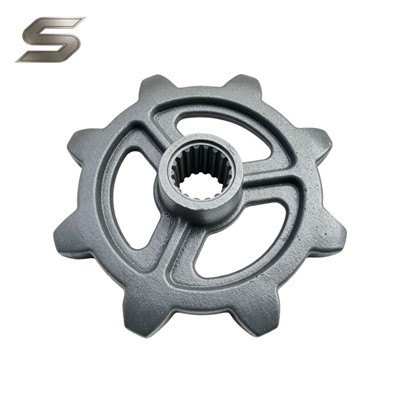
If you’re interested in learning more about how we’ve optimized our iron sand casting production for energy efficiency, or if you’d like to discuss your project needs, feel free to reach out to connect. We’re always happy to share what we’ve learned and collaborate on solutions that work for your business too.
Shell Molded Iron Castings References
- Miller, J. (2021). Energy Efficiency in Metal Casting Operations. Journal of Industrial Sustainability, 14(2), 89-102.
- Patel, R. (2020). Sand Reclamation Technologies for Foundry Energy Reduction. International Foundry Journal, 65(3), 45-52.
- Zhang, L. (2019). Power Factor Correction for Induction Furnace Applications. IEEE Transactions on Industrial Applications, 55(4), 3120-3127.
- European Foundry Association. (2022). Guide to Energy Efficiency in Sand Casting Production. Brussels: European Foundry Association.
- Smith, K. (2020). Continuous Improvement in Foundry Energy Management. Journal of Manufacturing Processes, 50, 215-222.
Hebei Shata Machinery Co., Ltd.
Address: No.11 Cangshun Rd., Shijiazhuang, Hebei, China
E-mail: Info@shatamachinery.com
WebSite: https://www.shatamachinery.com/
