If you’ve ever stood in a public restroom, a school cafeteria, or a busy office break room, grabbing a paper towel only to face an empty roll, you know the frustration. Worse, if you’re a facility manager trying to stay on top of supply costs or a vendor like me, you know how easy it is for dispensers to become a target for overuse or even theft. For years, I’ve gotten questions like this at my paper towel dispenser company: “Are there paper towel dispensers with a locking mechanism?” The short answer is yes, and they’re not just a niche add-on—they’re a solution designed for real pain points that small business owners, school admins, and healthcare teams deal with every day. Today, I want to break down how these locking dispensers work, why they matter, and how we build them to fit different needs, from high-traffic gyms to quiet clinic lobbies. Paper Towel Dispenser
Let’s start with the problem that made locking dispensers a game-changer. Before we started developing our own line, I heard stories from facility managers spending hundreds of dollars a month replacing wasted paper towels. One client, a middle school in a suburban district, told me that before switching to locking models, their custodial staff was restocking paper towels every single day—even in the middle of the week—because students would yank out entire rolls to use for art projects, wipe down backpacks, or even hoard them to take home. Another client, a small coffee shop in downtown, dealt with regular theft: local teenagers would walk in, grab handfuls of towels from the dispenser, and use them as makeshift napkins at nearby street corners or to clean their bikes, costing the shop an extra $150 a month in unnecessary supplies. That’s when I realized locking dispensers aren’t just a “security feature”—they’re a way to cut costs, reduce waste, and keep restrooms running smoothly without constant restocking runs.
Not all locks are created equal, though, and over the years, we’ve tested different mechanisms to find what works for our clients. Let’s walk through the most common locking types you’ll find in commercial dispensers, including ones we manufacture. The first and most basic is a keyed lock. This is the one you’ve probably seen on standard paper towel dispensers: a small latch on the front panel that requires a unique metal key to open. We use heavy-duty brass cores for our keyed locks, because they don’t wear out even after hundreds of opening and closing cycles, and they resist tampering. For schools, hospitals, and offices, we offer bulk sets of keys so facility managers can assign access to specific staff members—custodial teams, front desk admins, or department heads—while keeping unauthorized people out. That middle school I mentioned earlier switched to our keyed lock dispensers, and within three months, their restock frequency dropped from daily to every other day. The math was simple: they used 60% less paper towels that quarter, saving them over $800 in supply costs.
Another type we offer is a combination lock. This is a great option for spaces where multiple staff need access, but handing out metal keys could lead to lost copies or theft. Our combination locks use a rotating dial with four number settings, and we make it easy for facility managers to change the code whenever needed—no tools required. A recent client of ours is a chain of urgent care clinics with 12 locations across the state. They loved the combination lock dispensers because, with multiple shift schedules, nurses, front desk staff, and custodians all needed access to restroom supplies. Instead of keeping track of dozens of keys, each location has a single code, and when a staff member leaves, they just reset the code for that location. They told us this reduced their supply-related confusion by 75% and cut down on unauthorized access because people can’t walk up and open the dispenser without the code.
Then there’s the most advanced type, which we call a smart lock dispenser—perfect for large, high-traffic spaces like stadiums, airports, or corporate headquarters. Our smart lock dispensers connect to a simple mobile app, so facility managers can check dispenser status in real time: how many towels are left, when the last restock happened, and even get alerts when a roll needs to be replaced. But the lock feature is just as smart: we set it to only open when an authorized device (like a custodian’s work phone) is within 10 feet of the dispenser, or when a specific time window hits—so in a gym, for example, the dispenser can only be accessed during cleaning hours or peak usage times, not at 2 a.m. when the gym is closed. One airport client installed our smart lock dispensers last year, and they reported that paper towel waste dropped by 50% because the dispenser only gives out one towel at a time (you can adjust the setting to 1, 2, or 3 towels per use) and the lock prevents anyone from taking more than they need. They also save on labor costs because custodial staff no longer have to check every restroom every hour—they only get an alert when a dispenser is low, cutting restock routes by 20%.
Of course, locking mechanisms aren’t one-size-fits-all, so we design our dispensers to match the specific needs of each industry. For example, healthcare facilities need dispensers that are easy to open with one hand while wearing gloves, but still secure to prevent waste. Our keyed lock dispensers have a wide, ergonomic latch that you can open with a gloved hand, and the lock is sealed to prevent water or cleaning chemicals from getting in and causing it to rust. Schools and daycares need locks that kids can’t tamper with, but staff can use easily—our combination locks for schools have a large, easy-to-turn dial, so even a custodian with limited dexterity can open them, and we test the locks to make sure elementary students can’t figure out how to pick them or force them open. For small businesses like cafes or retail stores, we have compact locking dispensers that fit in under-counter spaces, with a key lock that’s small enough to not take up extra room but tough enough to prevent theft.
I want to be transparent, though—locking dispensers aren’t a fix for every single problem. If you have a very small, low-traffic space like a home office or a single-stall restroom that only you use, a locking dispenser is probably unnecessary. They do cost a bit more upfront than standard, non-locking dispensers, but when you factor in the savings from reduced waste and theft, most of our clients see a return on investment in less than six months. I always advise potential buyers to calculate their current paper towel costs: add up how much you spend on rolls, how often you restock, and any labor costs related to restocking. If you’re spending more than a couple hundred dollars a month, a locking dispenser will almost always save you money long-term.
Over the years, I’ve also heard common concerns from people considering locking dispensers. One is: “What if I lock myself out?” We’ve solved that with our keyed locks, where we keep a master key on file for every client (we only share it with facility managers upon request) and our combination locks have a “reset master code” option that lets you get back into the dispenser even if you forget your custom code. Another concern is: “Will the dispenser jam with the lock on?” We design all our locking dispensers with a tight, smooth fit, so the lock doesn’t interfere with how the paper towel pulls out. We test every lock during manufacturing to make sure it works even in extreme temperatures (for outdoor spaces) and after months of regular use—we’ve had dispensers in use for over five years with no lock malfunctions.
At the end of the day, locking paper towel dispensers are a simple, practical solution to a problem that almost every space with a public restroom faces: waste, theft, and the hassle of constant restocking. As a dispenser supplier, we’ve built our entire line around making these locking options accessible, durable, and tailored to different needs, from small cafes to large stadiums. If you’re tired of overpaying for paper towels, dealing with restroom supply shortages, or wasting staff time on frequent restocks, a locking paper towel dispenser might be exactly what you need.

We work with businesses across all industries, and we’re happy to help you find the right locking dispenser for your specific space. Whether you need a basic keyed lock for a small office, a combination lock for a school, or a smart lock for a high-traffic public space, our team can guide you through the options. To learn more about our line of locking paper towel dispensers, discuss pricing, or arrange a custom quote, get in touch with our team for procurement discussions. We’re here to help you cut costs, reduce waste, and keep your restrooms running smoothly.
Air Freshener Dispenser References
- Occupational Safety and Health Administration. Best Practices for Restroom Facility Management. U.S. Department of Labor, 2022.
- National Center for Education Statistics. K-12 School Facility Maintenance and Supply Costs. U.S. Department of Education, 2021.
- International Facility Management Association. Commercial Restroom Cost Reduction Strategies. IFMA, 2023.
- American Hospital Association. Healthcare Facility Supply Chain Efficiency Report. AHA, 2022.
Fanda Hygiene Co., Ltd.
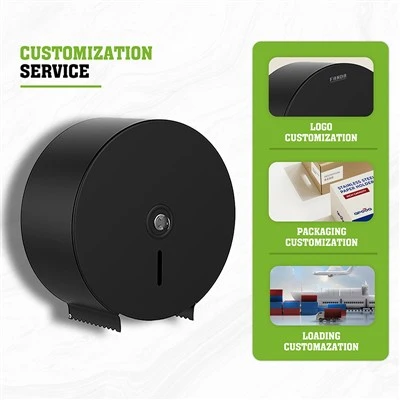
As one of the most professional paper towel dispenser manufacturers and suppliers, we also support customized service. With a professional production team, we are able to meet the needs of the majority of our customers. Welcome to wholesale bulk paper towel dispenser in stock here and get quotation from our factory.
Address: No.18-25, Changsheng Ln., Sec. 1, Huanzhong Rd., Beitun Dist., Taichung, Taiwan
E-mail: Sales03@fanda.com.tw
WebSite: https://www.fanda-hygiene.com/
