If you’ve ever walked through a produce warehouse, stood beside a loading dock as a shipment of fresh ginger unloaded, or dealt with the headache of spoiled, bruised ginger that never arrived at its destination in usable condition, you’ve probably wondered: is there a better way to move this high-value, fragile root? For years, many small-scale ginger farmers and regional distributors have relied on old-fashioned wooden crates, flimsy cardboard boxes, or even generic plastic bins to move ginger from farm to market. As an Agricultural Bulk Container supplier who’s worked with produce handlers across North America and parts of Europe for over a decade, I hear this question almost every week: Can agricultural bulk containers be used for transporting ginger? Agricultural Bulk Container

The short answer is yes—with a few critical considerations that I’ve learned firsthand, from testing prototypes on small ginger trials to designing custom bulk containers for large spice exporters. But it’s not a one-size-fits-all answer, and that’s the part most people get wrong when they first ask. Ginger isn’t just another bulk commodity. It’s a fleshy, high-moisture root that bruises easily, is prone to rot if exposed to too much humidity, and loses commercial value if it’s damaged during transit. So when you’re choosing a container for ginger transport, you can’t just pick a standard bulk bin off the shelf and expect it to work. You have to tailor the container’s features to ginger’s specific needs.
Let’s start with what makes ginger such a unique crop to transport. Fresh ginger is harvested with a dirt coating on its skin (that’s why you usually scrub it before using it at home), and it has a natural waxy cuticle that protects it from drying out—but only if that cuticle isn’t scraped or punctured. Bruising or skin damage creates entry points for mold and bacteria, which is why a load of ginger that’s perfect when it leaves the farm can go bad within a week if it’s been banged around in a rough container. Also, ginger requires very specific ventilation. It breathes, just like any living plant product, and if it’s stored in a sealed container with no airflow, the carbon dioxide it releases builds up, leading to heat buildup and condensation. That’s a recipe for rot. I’ve seen entire pallets of ginger ruined because someone used a closed plastic tote that didn’t let air circulate. Wooden crates, while they do have gaps, often have splinters that can scrape ginger skin, and they’re heavy, which makes them hard to stack and costly to ship.
Now, how do agricultural bulk containers solve these problems? For those who don’t know, agricultural bulk containers are heavy-duty, stackable bins designed specifically for moving raw produce. They’re different from the generic plastic bins you might use for storing tools or moving household items. They’re built to withstand years of use on farm fields, warehouse floors, and shipping docks, and they’re sized to fit standard pallets and forklifts, which cuts down on loading and unloading time. For ginger, the key features we focus on are perforations, surface material, load capacity, and stackability.
Let’s talk about perforations first. When I started out in this business 12 years ago, most bulk containers had either too few holes or holes that were too big for ginger. Too few holes, and you get the condensation and rot I mentioned. Too big, and small pieces of ginger can fall through the gaps, especially if the roots are slightly broken during harvest. I worked with a small ginger farm in Tennessee to test this back in 2018. They were using standard bulk bins with 2-inch square holes, and they were losing an average of 8% of their load to fallen ginger and bruising. We modified our standard containers to have ½-inch perforations along the sides and bottom, evenly spaced, and added a slight texture to the interior walls so ginger wouldn’t slide around when the bins were being moved on a truck. After that trial, their loss dropped to less than 2%—a huge difference for a crop that sells for $3 to $5 a pound at wholesale.
Next, the surface material. We use food-grade, high-density polyethylene (HDPE) for all our agricultural bulk containers, and that’s non-negotiable for ginger. Unlike wood, HDPE doesn’t absorb moisture, so it doesn’t harbor mold or bacteria from one load to the next. It’s also smooth, so ginger’s waxy cuticle stays intact—no more splinters scraping skin, no more rough edges causing bruising. I’ve heard people say plastic is “not eco-friendly,” but our containers are 100% recyclable, and they last 10 to 15 years with proper care, which is way longer than wooden crates that need to be replaced every 1 to 2 years. For a ginger exporter moving 50,000 pounds a year, that’s thousands of dollars in savings on replacement containers and reduced produce loss.
Load capacity and stackability are another big factor for ginger. Most fresh ginger shipments are palletized, so you need containers that fit standard 48×40-inch pallets. Our standard bulk containers are 48×40 inches, which means you can fit 4 bins per pallet, stacked two high, for a total of 80 cubic feet of ginger per pallet. That’s way more than you can fit in cardboard boxes, which usually top out at 1 to 2 cubic feet per box. Stackability is key too—our containers have a reinforced lip that lets you stack them high on a truck or in a warehouse without the lower bins collapsing. But here’s a tip specific to ginger: when stacking, you should never stack more than three high. Ginger is heavy, and the pressure from the top bins can bruise the roots in the lower ones. We design our containers to support up to 1,000 pounds when stacked two high, but for ginger, we recommend a maximum of two bins high to be safe. I always tell my clients: better to stack a little lower and have perfect ginger than stack higher and lose half the load.
Another thing to consider is temperature control, which ties into how you use agricultural bulk containers for ginger transport. Fresh ginger is best transported at temperatures between 55°F and 60°F, with relative humidity around 85%. Our containers work great with passive ventilation, but if you’re shipping long distances—say, from a farm in Peru to a distributor in Canada—you might want to pair them with climate-controlled trailers. The containers’ perforations work with the trailer’s ventilation system to keep the air circulating evenly, so there are no hot spots in the middle of the pallet where rot can start. I worked with a ginger exporter in India a few years ago who was shipping ginger to the Middle East. They were using cardboard boxes before, and their spoilage rate was 12% per shipment. When they switched to our perforated HDPE bulk containers, paired with climate-controlled trucks, their spoilage dropped to 3%. That’s not just better produce—it’s higher profit margins, and fewer products going to waste, which is a win for everyone.
Wait a minute, though—what if you’re a small-scale farmer with only a few hundred pounds of ginger to move a season? You might think bulk containers are too big or too expensive for you. That’s a common misconception. We make smaller, modular agricultural bulk containers that hold up to 200 pounds of ginger, perfect for small farms or local distributors. They’re stackable, easy to clean, and work with standard pallet jacks even if you don’t have a full forklift. I work with a group of 15 small family ginger farms in Vermont that pool their orders to fill a full pallet of our containers. They split the cost of the containers, which is way cheaper than buying individual boxes every year, and they can transport their ginger to farmers’ markets and regional distributors without worrying about damage. So bulk containers aren’t just for big operations—they work for every size of ginger producer, as long as you pick the right size for your needs.
I also want to talk about proper handling and preparation, because even the best container won’t fix bad practices. When you’re packing ginger in bulk containers, you don’t want to overfill the bin. Our containers hold up to 400 pounds of produce, but for ginger, we recommend filling them to 80% capacity, leaving a little space at the top so the ginger can shift slightly without bruising. You should also brush off excess dirt before packing—you don’t want clumps of dirt trapping moisture around the ginger. And always clean your containers between loads. Our HDPE containers are easy to power-wash and sanitize, which prevents cross-contamination from any mold or bacteria that might be left over from the previous load. I always remind clients: a container is only as good as how you use it and how you care for it.
Now, let’s address some of the common concerns people have when they first consider using agricultural bulk containers for ginger. The first one is cost. I won’t lie—our bulk containers are a bigger upfront investment than cardboard boxes or used wooden crates. But when you factor in reduced produce loss, fewer replacement costs, and faster loading/unloading times, they pay for themselves within 2 to 3 years. Let’s do the math: if you’re moving 10,000 pounds of ginger a year, and you lose 8% to bruising and rot, that’s 800 pounds of ginger going to waste. At an average wholesale price of $4 per pound, that’s $3,200 lost every year. Our containers cost about $150 each, and you need 10 containers to hold 10,000 pounds of ginger. That’s $1,500 upfront. After two years, you’ve already saved $6,400 in produce loss, which is way more than the cost of the containers. The second concern is weight. HDPE containers are lightweight but sturdy—our 400-pound capacity bin weighs only 25 pounds, which is way lighter than a wooden crate of the same size. That reduces shipping costs, because you’re not paying to transport extra weight, and it’s easier on your workers when they’re loading and unloading.
I’ve also worked with several clients who sell processed ginger—ginger paste, dried ginger, and ginger powder— and bulk containers work for those products too. For dried ginger, which is less fragile, you can use our standard closed bulk containers (no perforations) to keep out moisture, since dried ginger absorbs water easily. For ginger paste, which is packaged in bulk for food manufacturers, our containers have a smooth interior that’s easy to clean, so there’s no residue left behind that would affect the flavor of the paste. The same principles apply: match the container’s features to the product’s specific needs.
So to circle back to the original question: Can agricultural bulk containers be used for transporting ginger? Absolutely. But they’re not a one-size-fits-all solution. The key is choosing the right container design—perforated for fresh ginger, closed for dried or processed ginger—selecting the right size for your operation, and following proper packing and handling practices. As someone who’s spent over a decade refining bulk container designs for produce, I’ve seen firsthand how this simple swap can turn a high-loss, high-stress process into a low-loss, high-profit one for ginger farmers and distributors.
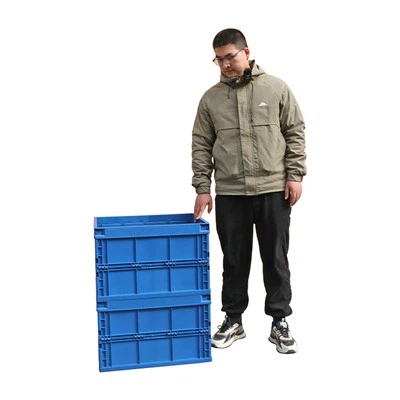
If you’re a ginger farmer, distributor, or food manufacturer who’s tired of losing money to spoiled or damaged ginger, I’d love to talk to you. Whether you’re a small farm looking for 5 containers a year or a large exporter needing 500, we can design a custom bulk container solution that fits your needs. Stop dealing with rough cardboard boxes, splintery wooden crates, and avoidable produce loss. Reach out to start a conversation about how agricultural bulk containers can improve your ginger transport process.
Industrial Pallet Container References
FAO. (2021). Post-harvest management of root and tuber crops. Food and Agriculture Organization of the United Nations.
USDA. (2022). Produce transport and storage guidelines for specialty crops. U.S. Department of Agriculture Agricultural Marketing Service.
European Spices Association. (2020). Best practices for transporting ginger and other tropical spices. European Spices Association.
Shanghai Qusheng Plastics Co., Ltd.
As one of the leading agricultural bulk container manufacturers and suppliers in China, we have world-leading production equipment and strong manufacturing capabilities. Please rest assured to wholesale customized agricultural bulk container from our factory. For quotation, contact us now.
Address: No.85 Hengtang Road, Huaqiao Town, Kunshan City, Jiangsu Province
E-mail: Totepallet-inquiry@plastic-crate.com
WebSite: https://www.totepallet.com/
